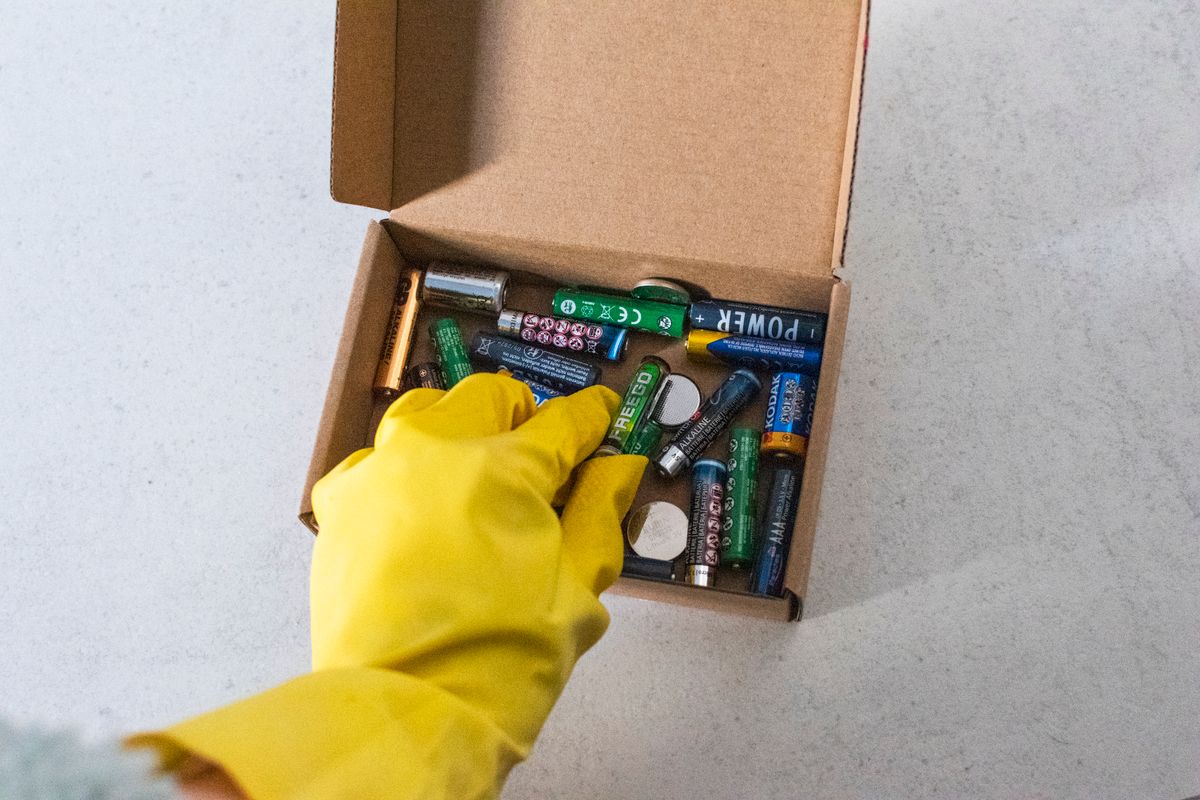
A used battery does not belong loose beside coins, keys, and screws. Even when it no longer powers a device, it may retain energy. Identify its type and condition before deciding how to store it or where to take it. The goal is a short, organized route to the correct collection point.
Read the label, not the shape
EPA notes that battery chemistry is identified by markings rather than appearance. Its guidance directs lithium and rechargeable batteries away from household trash and municipal recycling bins. For lithium batteries, protect terminals with nonconductive tape or use individual bags as directed, and find a suitable battery or hazardous-waste collection program. Rules for other types vary by state and locality.
If a battery is swollen, leaking, damaged, or unusually hot, stop using or charging it and seek the manufacturer's or collection service's specific instructions. Do not open it or experiment with repairs. For an immediate fire or smoke hazard, move away and contact emergency services. A damaged battery should not wait in an ordinary mixed collection box.
Separate storage from the spare supply
Keep used batteries clearly apart from fresh ones so nobody tests them repeatedly in household devices. Choose a dry location away from heat and inaccessible to children, especially for button and coin cells. Protect the stored items from crushing and contact with loose metal. Use the receiving program's preparation instructions for the particular battery type.
Do not pry a built-in battery out of an appliance merely to make the collection smaller. Some batteries are not user removable. Ask whether the complete device should go to an electronics collection program instead. Keep its model details available when making that inquiry.
Arrange the actual handoff
Confirm the accepted chemistries, size limits, hours, and any fees before traveling. A small retail collection box may not accept every battery or a damaged pack. Tell staff about damage and follow their instructions instead of leaving the item anonymously beside the box.
For ordinary household cells, connect the drop-off to an upcoming suitable errand rather than building an indefinite reserve. Record which devices use each size when replacing batteries. This makes buying the right replacements easier and reduces the chance of confusing used cells with new ones. Rechargeable options should be chosen only where the device permits them; the useful system is one that matches the equipment and has a clear end-of-life route.