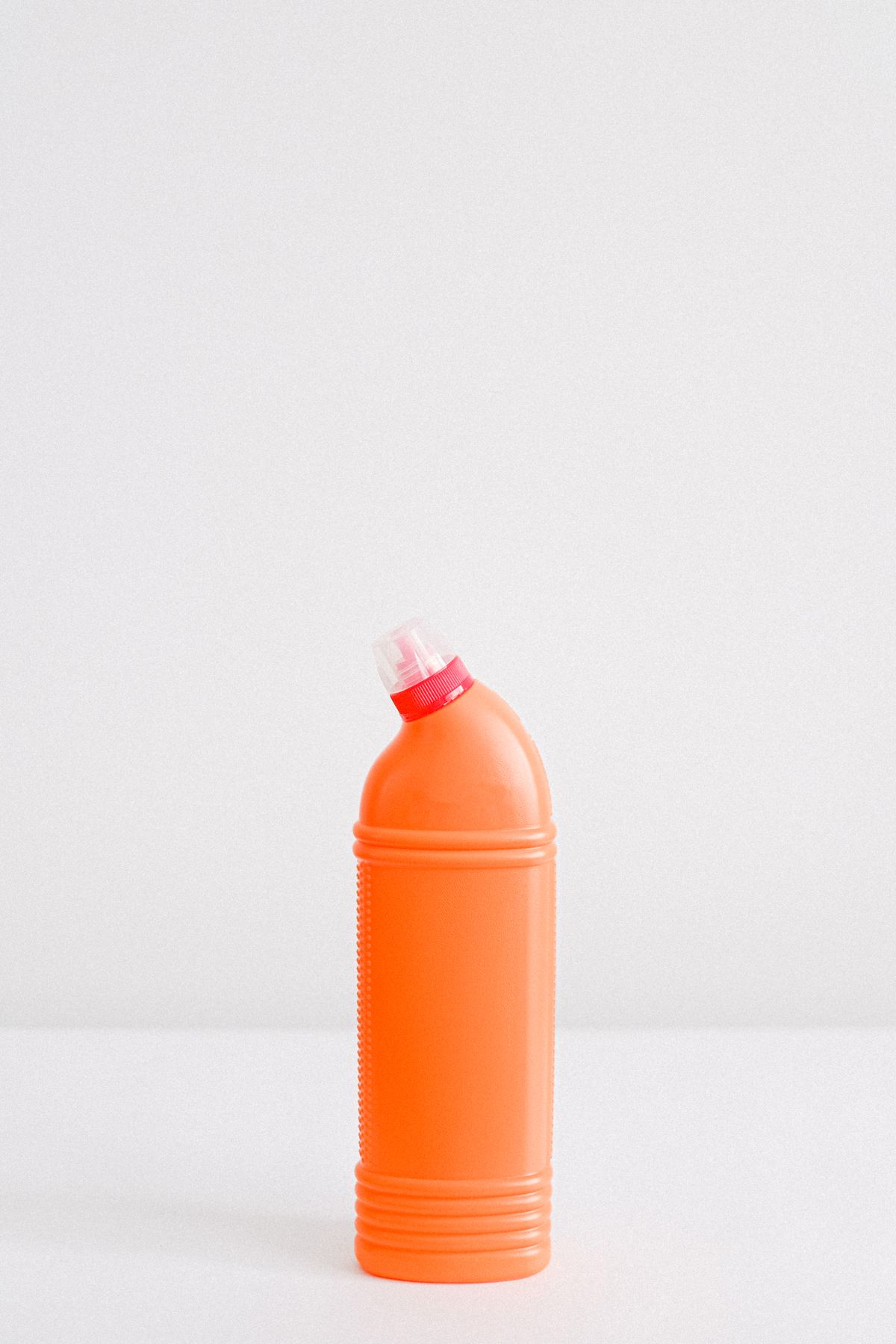
A splash is not a standard measurement. The amount changes with the bottle opening, how firmly you squeeze, and how much liquid remains. Before reaching for a measuring cup, establish whether the product is ready to use or a concentrate. Adding water to the former, or using the latter undiluted, can defeat the instructions you are trying to follow.
Find the label directions for your particular surface and task. A product may list different applications for routine cleaning and a specific heavy-duty job. The instructions for a floor are not necessarily the instructions for cabinet fronts. Required wiping, rinsing, or contact time is part of the application; extra product does not replace those steps.
Scale the mixture, not your guess
If a particular label calls for one fluid ounce in a gallon of water, half a gallon would take half a fluid ounce of that same product. This is a calculation example, not a cleaning recipe. Another bottle may specify a completely different concentration. Keep the units consistent and use a dedicated measuring tool with markings you can actually read.
For a bucket you use regularly, mark the appropriate water level after measuring it properly. Half the height is not necessarily half the capacity, especially in a bucket that widens toward the top. Leave room above the working level so you can move the bucket without spilling.
Follow the manufacturer's filling sequence. Keep the measuring cap and bottle neck clean so dried residue does not interfere with closing the container. A dedicated tool should stay with the cleaning supplies, not return to food preparation. If the graduations have worn away, replace the tool instead of accepting an increasingly uncertain dose.
Check the method before increasing the amount
Disappointing results can come from the wrong product, an unsuitable surface application, or insufficient removal of loose soil. Re-read the directions before adding more concentrate. EPA's household safety guidance reinforces following product labels; a stronger mixture is not automatically a better choice.
Never combine cleaners to create a new mixture. Prepare only the volume needed for the planned job, and follow the product's directions on whether a diluted solution can be stored. Do not keep an unidentified remainder in a beverage bottle.
When you finish, deal with the remaining solution and clean the equipment as directed. Store the original product securely with its readable label. A small, repeatable measuring setup is usually easier to maintain than a collection of partly filled bottles whose concentrations nobody remembers.