A kitchen food-scrap caddy is an intermediate container. Its contents will eventually go to a curbside program, a community drop-off, or a suitable home compost system. These destinations may accept different materials. Identify the actual route before buying liners, replacement filters, or a particularly large bin.
A short sign at the collection point can list accepted contents. Make it specific to the current program rather than relying on a generic leaf symbol. Visitors need to know what belongs in the container, not simply that it is associated with composting. A bag labeled compostable is not automatically accepted by every collection service or appropriate for a backyard pile.
Size the container around emptying
Consider how often you can take the contents to their next destination. A short trip to an outdoor cart supports a different routine from a distant shared drop-off. Choose a filled weight you can carry comfortably. Extra capacity should not become a reason to leave scraps in the kitchen longer simply because the caddy is not full yet.
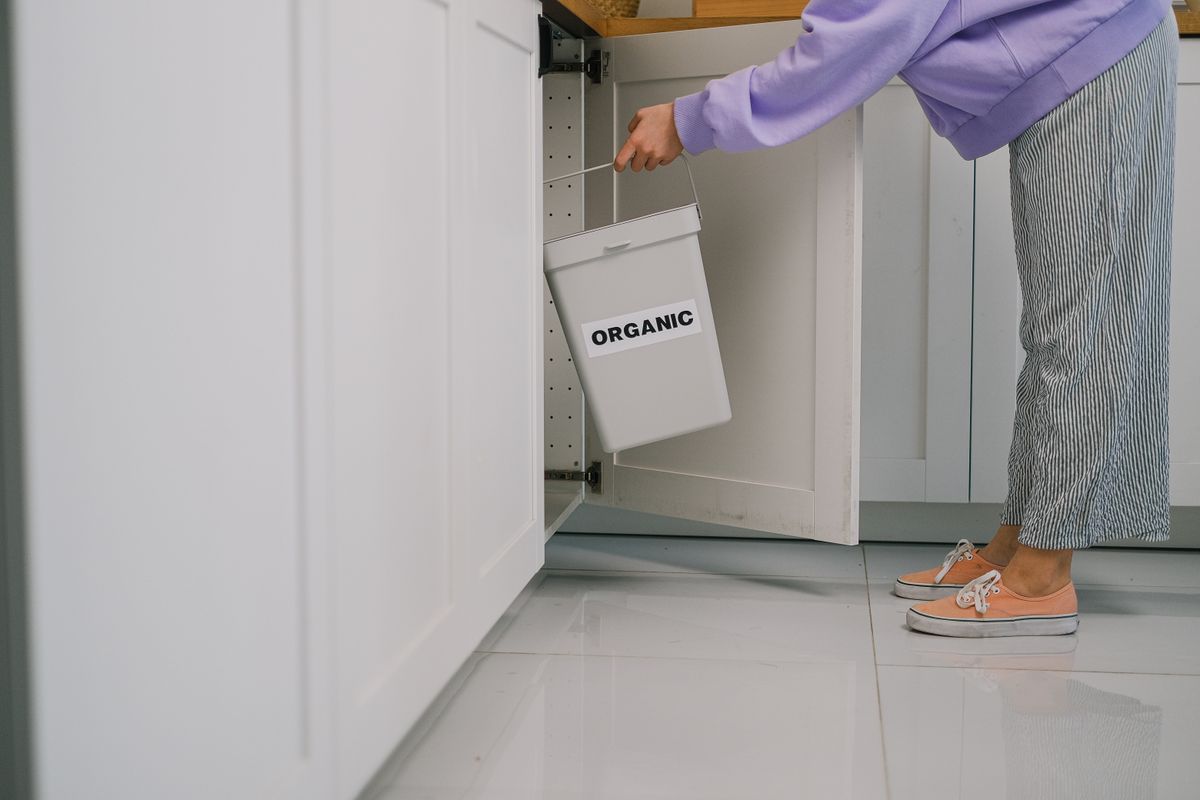
Try the proposed location while following your normal cooking movements. Can the lid open without moving other items? Can the container be lifted out without catching on plumbing or drawers? A countertop caddy should not interfere with handling hot cookware or knives. Under-sink storage also needs to remain dry and accessible for inspection.
Inspect the surfaces you will clean
A removable insert may make carrying and washing easier, provided you can grip it when full. Look at corners, edges, and the underside of the lid. Complicated shapes create additional areas to clean. Follow the material and manufacturer care instructions rather than assuming every caddy is dishwasher-safe.
If a model uses a filter, check replacement availability, maintenance, and recurring cost before purchasing. A filter does not replace regular emptying. Also decide where the washed container will dry fully. An appropriate container already in the kitchen may be enough to test the routine before investing in a dedicated model.
Keep the destination clear
Provide liners only if the receiving program permits them. Recheck requirements when changing the drop-off location or collection service. During the first week, notice whether unsuitable materials appear in the caddy or whether emptying is inconvenient. Adjust the sign or position before expanding into a larger system. A useful caddy supports a clear sequence from food preparation to the actual composting route; its appearance and advertised capacity are secondary to that sequence.