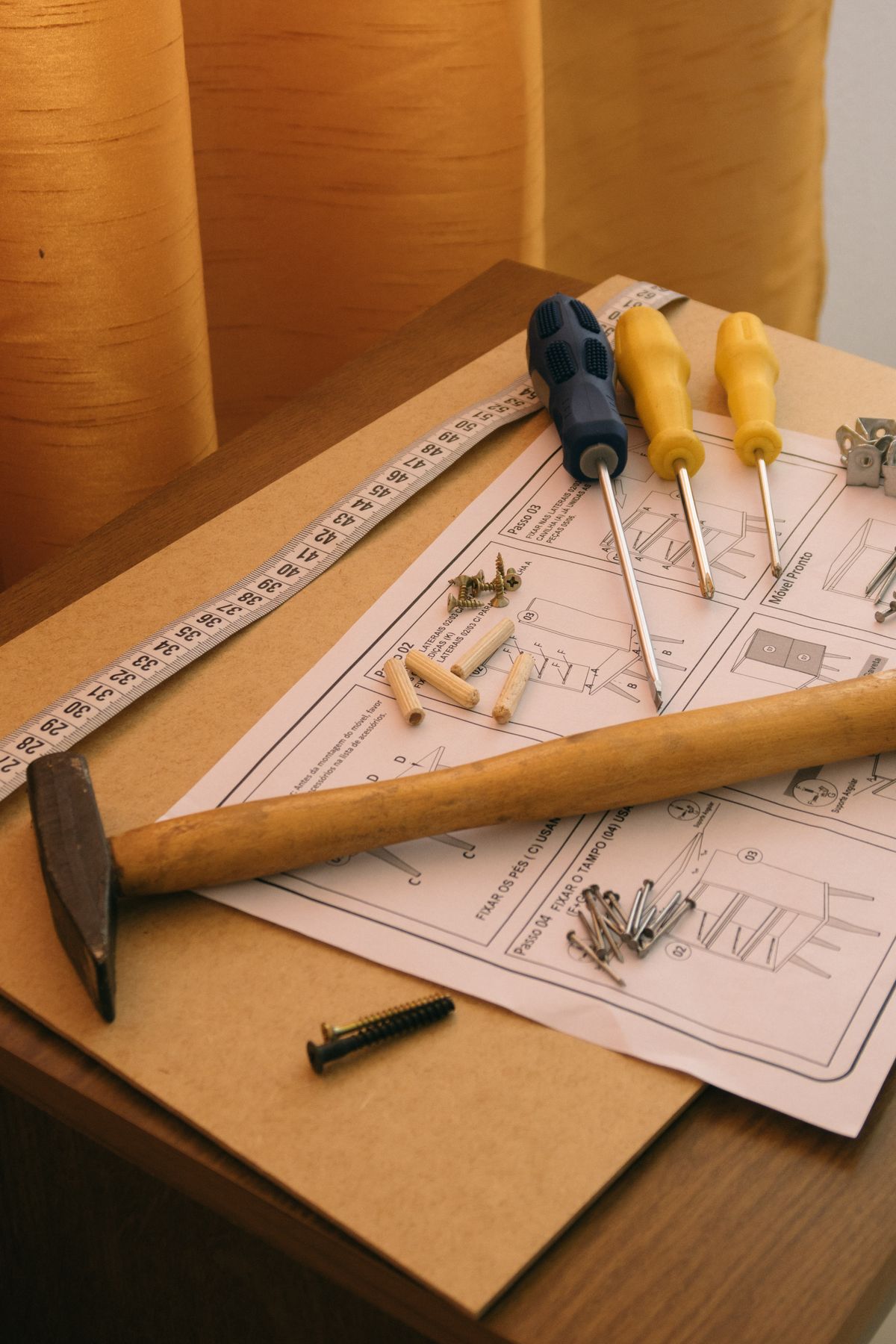
A crooked cabinet door does not mean every visible screw is loose. Some screws adjust alignment while others attach the hinge. Turning them at random can make the problem worse. Start by finding the assembly instructions and describing the symptom precisely: a handle moves, a door rubs, or the entire piece rocks.
Clear enough space to inspect the connection. Do not hold a heavy door or component alone in a position where it could fall. Stop loading unstable furniture until the problem is understood. Wall attachments and anti-tip restraints are separate safety components; a secure drawer front does not tell you whether those restraints are correctly installed or intact.
Identify the part before removing it
Photograph the connection and any part numbers. Similar-looking hardware can have different hole spacing, screw lengths, and material requirements. A replacement must suit the intended connection. Keep removed components together and note where they belonged instead of combining screws from several pieces of furniture in one container.
For straightforward tightening described in the instructions, use the correct tool. A poorly fitting screwdriver can damage the screw head. Work with control rather than extra force. If a screw spins without tightening or its mounting moves in the surrounding material, continued turning is not a repair. A longer screw is not a universal substitute either; it could emerge through another surface or damage the construction.
Inspect what supports the hardware
Look for cracks, broken edges, or swollen panels around a fastener. These conditions change the problem from loose hardware to a damaged attachment area. Ask the manufacturer or an appropriate repair service about a solution that accounts for the material, load, and construction. An improvised filler is not a universal fix for a connection that carries weight.
Hinge adjustment makes sense only when the attachments and surrounding material are sound. Follow the relevant instructions and avoid changing several adjustments simultaneously. A brief note about what was changed can help you tell whether the door gap or movement actually improved. Stop if the instructions do not match the hardware in front of you.
Revisit the original symptom
After an appropriate repair, check the affected function without unnecessary loading. Does the handle still move, does the door catch, or does the connection loosen again? Repeated loosening is a reason to investigate the cause, not simply to repeat tightening indefinitely. Do not describe furniture with an unresolved load-bearing defect as repaired when passing it to someone else. A clear account of what remains wrong also helps a repair service identify the next useful step.