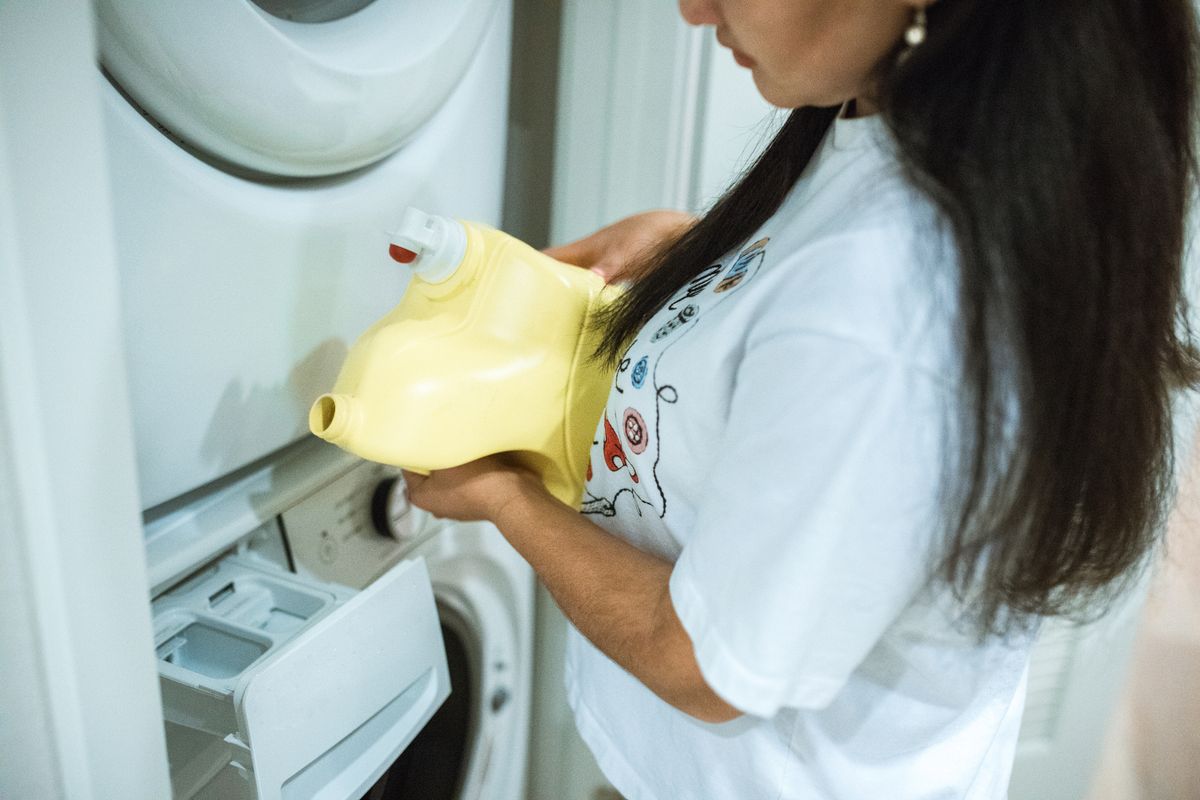
Filling the same cap for every load is convenient, but it is not much of a measuring system. A small group of lightly worn shirts presents a different job from a full load of heavily soiled work clothes. Start with the product label and the washer instructions, then decide which directions apply to the laundry in front of you.
Read the load, then the label
Check whether the detergent is suitable for your machine, including any high-efficiency requirement. Find the dosage instructions for the load size and soil level rather than treating the top of the cap as a fill line. If the product provides water-hardness guidance, obtain the relevant information from your water utility instead of guessing from a mark on the faucet.
The washer's maximum capacity does not apply to every cycle. A delicate program may have a different loading limit from a cotton cycle. Check garment labels as well, especially when one item would require the rest of the load to use unsuitable conditions. An appropriate detergent dose cannot compensate for an overloaded drum or an incompatible wash program.
Look separately at localized stains. If one shirt has a mark that needs pretreatment, follow the instructions for a suitable product and the fabric. Increasing detergent across the entire load is not necessarily the answer. Avoid combining products casually in the dispenser.
Make the measurement repeatable
Use the markings associated with the current detergent. A cap from a previous bottle may have a different scale, and a concentrated replacement may use a different amount. Pay attention to the units. A scoop supplied with one powder should not automatically measure another powder by volume.
Keep the dosing chart accessible. If the packaging is awkward to turn around in a narrow cupboard, take a clear photograph and label it with the exact product. Replace that reference when you change detergents. A note containing only a number is hard to interpret months later.
Consider your usual load sizes before buying fixed-dose packets. Their convenience may fit your routine, or you may need the flexibility of a measurable product. Store all detergents as directed and keep them secured away from children and pets; a useful adult workstation should not create easy access for others.
After several washes, assess the result without assuming every problem means more detergent is needed. Residue, odor, or poor cleaning can have other causes, including loading, cycle selection, and machine care. Change one relevant factor at a time. The goal is a method you can repeat confidently when the next ordinary load arrives.