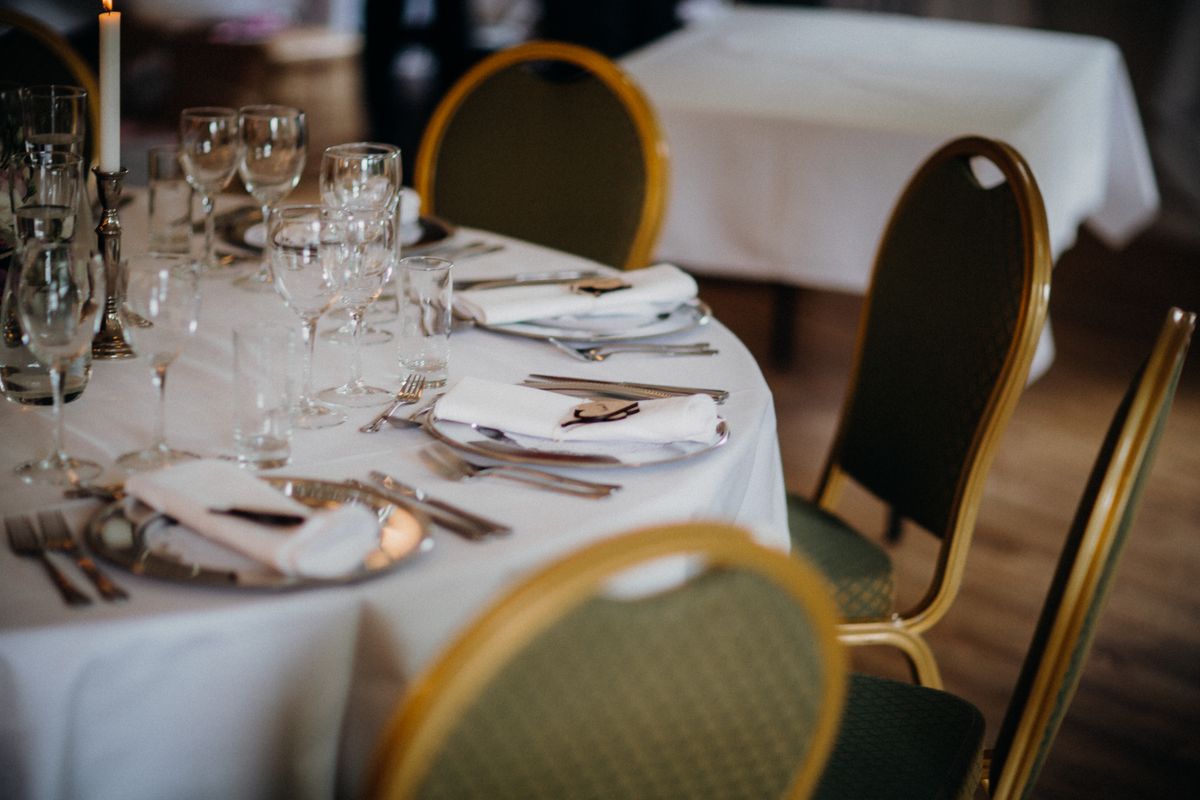
Reusable dishes for a gathering are mainly a coordination task. Counting plates alone does not provide a complete plan. Consider whether there will be several courses, whether washing is possible during the event, and who will handle transport and returns afterward.
Count against the menu and schedule
Write down confirmed attendance and the sequence of food service. A single-course dinner needs a different setup from an afternoon of cake followed by a buffet with guests arriving at different times. Decide whether clean dishes can be reused after an intermediate wash or whether time and space make that unrealistic.
Count existing equipment by function: dinner plates, smaller plates, bowls, drinking vessels, and utensils. Add serving dishes and their utensils. A missing serving spoon can disrupt the meal even when plenty of plates are available. Mixed designs are not a problem when their size, condition, and intended use are appropriate.
Borrow a specific shortfall
For a modest shortage, ask friends or family for the exact items needed. A local rental service may suit a larger event. Clarify availability, collection, washing requirements, and return timing before committing. An inexpensive rental is not necessarily convenient if an early next-morning return conflicts with your plans.
Record whose items arrive. A photograph of the assembled groups or a short inventory can help when returning them. Avoid labels that may damage delicate finishes. Rental items may have their own instructions for marking, cleaning, and repacking, so follow those instead of creating an improvised identification system.
Separate clean supply from used collection
Set up a recognizable place for used dishes without blocking exits or walkways. Sturdy existing bins can help, but do not overload them. Tall unstable stacks are awkward, particularly when guests add their own plates. Keep clean utensils clearly separate so nobody searches among used pieces for a spoon.
For a small event, a simple division of responsibility may be enough: one person collects dishes while another manages the dishwasher when needed. Do not plan around the machine's theoretical place-setting count if large serving bowls will occupy substantial space. Glassware, plastics, and decorated pieces may have different washing requirements.
A realistic cleaning schedule also protects the people hosting. If no one will be available to wash during the meal, provide sufficient appropriate items for the planned service or simplify the menu. Do not build a plan that depends on an unnamed person spending the whole event at the sink.
Decide how the evening ends
Have clean transport packaging ready for returns. Count borrowed items after washing and report damage honestly. Do not slide a chipped plate unnoticed into a stack. Resolve replacement questions with the owner or according to the rental agreement.
After the gathering, note what was actually used and where shortages occurred. Unused cups alongside a shortage of serving bowls offer a better lesson than buying a large precautionary set. Reuse is easier to maintain when supplying, using, washing, and returning tableware are planned as connected parts of the same event.