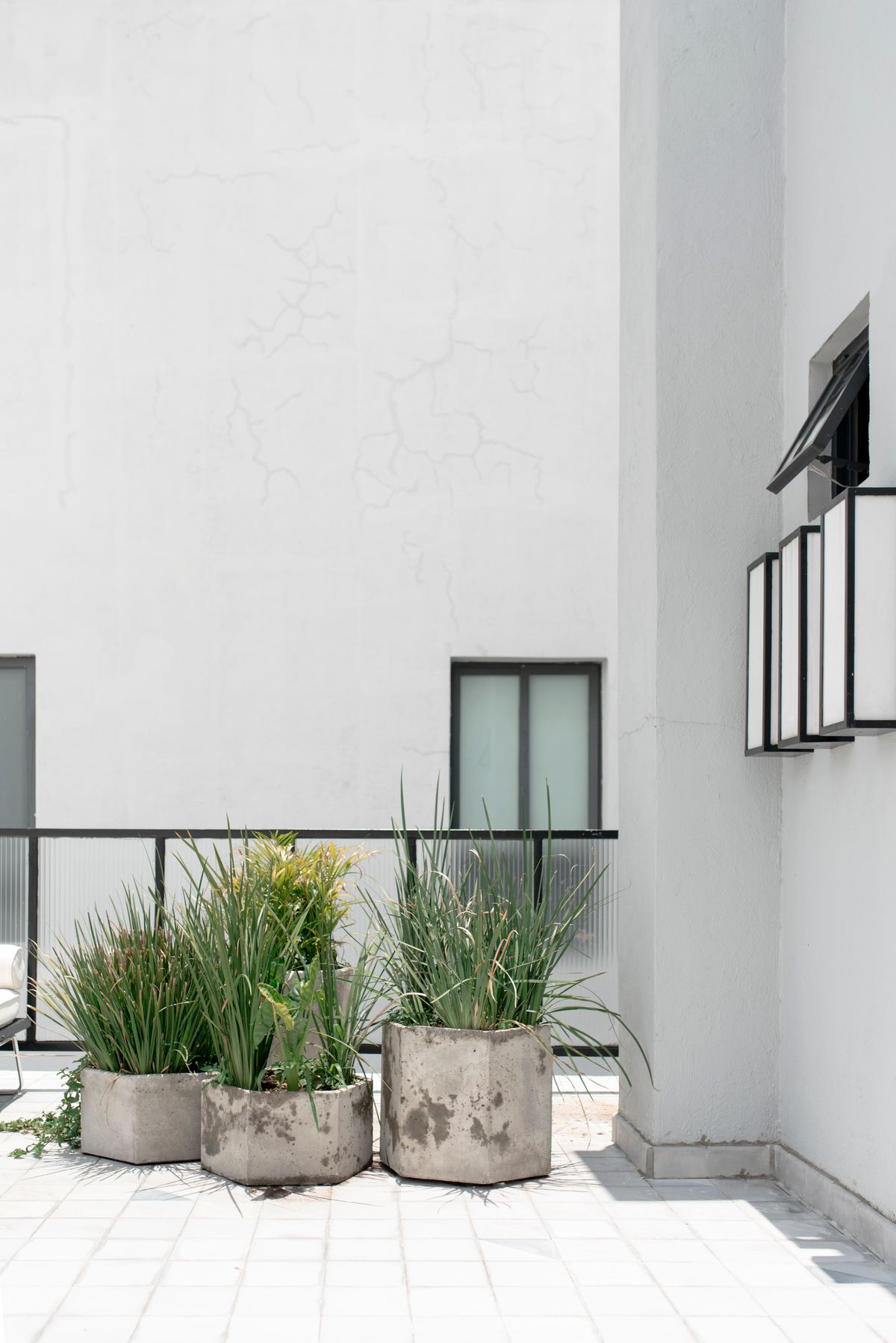
On a small balcony, a chair, watering can, plants, and laundry may compete for the same few square feet. Before selecting another shelf, decide what the space is primarily for. A breakfast spot needs a different clear area from a balcony used mainly for drying clothes and growing herbs.
Make the walking route visible
Move portable items aside temporarily and check the door's full opening. Keep necessary access and drainage points clear. Establish a route to the area you use most often. Even with a chair pulled out or a bag set down, you should not need to step over plant pots.
Measure the usable area before rearranging existing furniture. Open a folding chair completely and check its working footprint rather than relying on its folded size. A smaller watering can may be enough for a few plants and easier to store; the largest one need not retain the best position by habit.
Inspect planters for damage and stability. A cracked or unstable pot should not occupy an exposed location. Use appropriate, securely fitted supports and follow building requirements. Improvised exterior attachments and heavy arrangements on railings are not ordinary storage shortcuts.
Give existing objects a suitable role
A weather-suitable table can also hold plants while you water them. A small basket may collect dry gardening gloves if it sits in a suitable protected spot. Check materials and expected loads before leaving indoor furniture outside permanently. A decorative cover does not turn moisture-sensitive particleboard into outdoor furniture.
Consider wind, rain, and sun exposure. Lightweight objects need a secure place. Water should not run uncontrolled onto neighboring areas, and saucers need checking as appropriate to their use. Crowding pots together can make those checks difficult and watering unnecessarily awkward.
Keep reserve supplies modest. An opened bag of potting mix, several empty pots, and duplicate tools can occupy much of the balcony. Decide what the current season actually requires and where other items can be stored appropriately. The recovered floor space may be more useful than an additional shelving unit.
Live with the layout before adding anything
Use the balcony normally for a week. Record specific problems rather than a general wish for more storage: the chair cannot open, the watering can blocks the door, or one pot is hard to reach. Adjust one location at a time. If a need remains after that trial, you will know the dimensions and job of a possible addition more precisely. The purchase can then support a working arrangement instead of being expected to invent one.