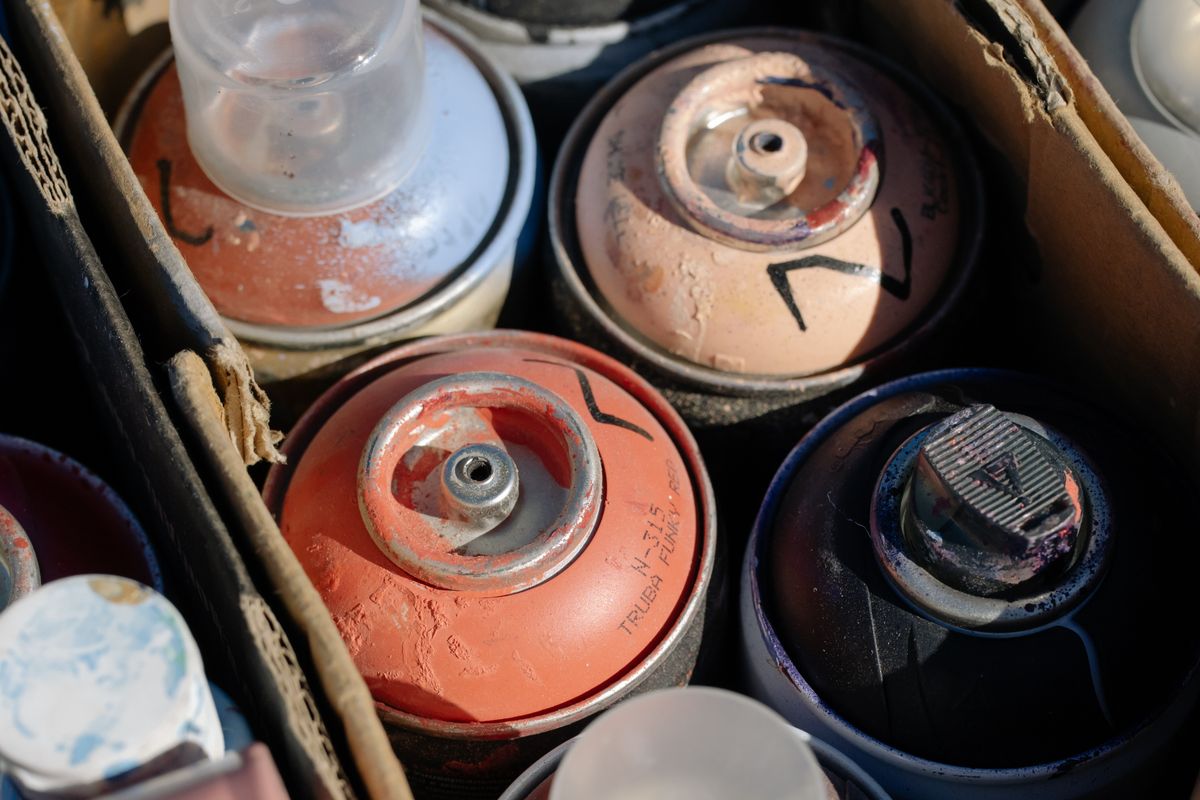
An aerosol can needs a disposal decision about its contents and condition, not just its metal shell. A container with product remaining is different from an accepted empty package. Read the label and check your local instructions for the specific product before placing it in any collection bin.
Do not manufacture an empty can
Do not spray unwanted contents into the air simply to empty the package for disposal. Do not puncture, cut, heat, or crush the can. Keep the original label so a receiving program can identify it. If the product name is missing, describe the uncertainty rather than guessing what the can contains.
EPA's household hazardous waste guidance explains that leftover products with dangerous properties need appropriate handling and local disposal advice. An aerosol containing paint or another hazardous product may need a different route from a completely empty can accepted by a local recycling program. Check both the product instructions and the receiving service's requirements.
Describe the condition before traveling
When asking for advice, provide the product name, visible warnings, and whether contents remain. If a can is leaking, damaged, or behaving unusually, obtain specific handling directions before transport and stop using it. For an immediate hazard, move away and contact appropriate emergency assistance. Do not mix leaked contents with other household chemicals.
Store intact products according to their labels, away from children and unsuitable heat. A box beside a heater or inside a hot parked car is not a long-term storage arrangement. Keep labels visible instead of wrapping everything into an unidentified bundle.
Use a confirmed collection appointment
Check hours, residency requirements, quantity limits, and any appointment rules for the receiving facility. A recycling center may not operate hazardous-waste collection whenever its ordinary bins are open. Tell staff about known damage, and do not leave unknown chemicals beside a closed gate.
Review the products already stored before purchasing another can. For an occasional task, choose an amount that fits the expected use. Another product format may be suitable, but the decision should follow the task and manufacturer guidance rather than a blanket preference.
A small, labeled inventory is particularly useful for infrequently used products. Knowing what is already present can prevent several partly full cans from accumulating until nobody remembers why they were bought or how they should be handled.