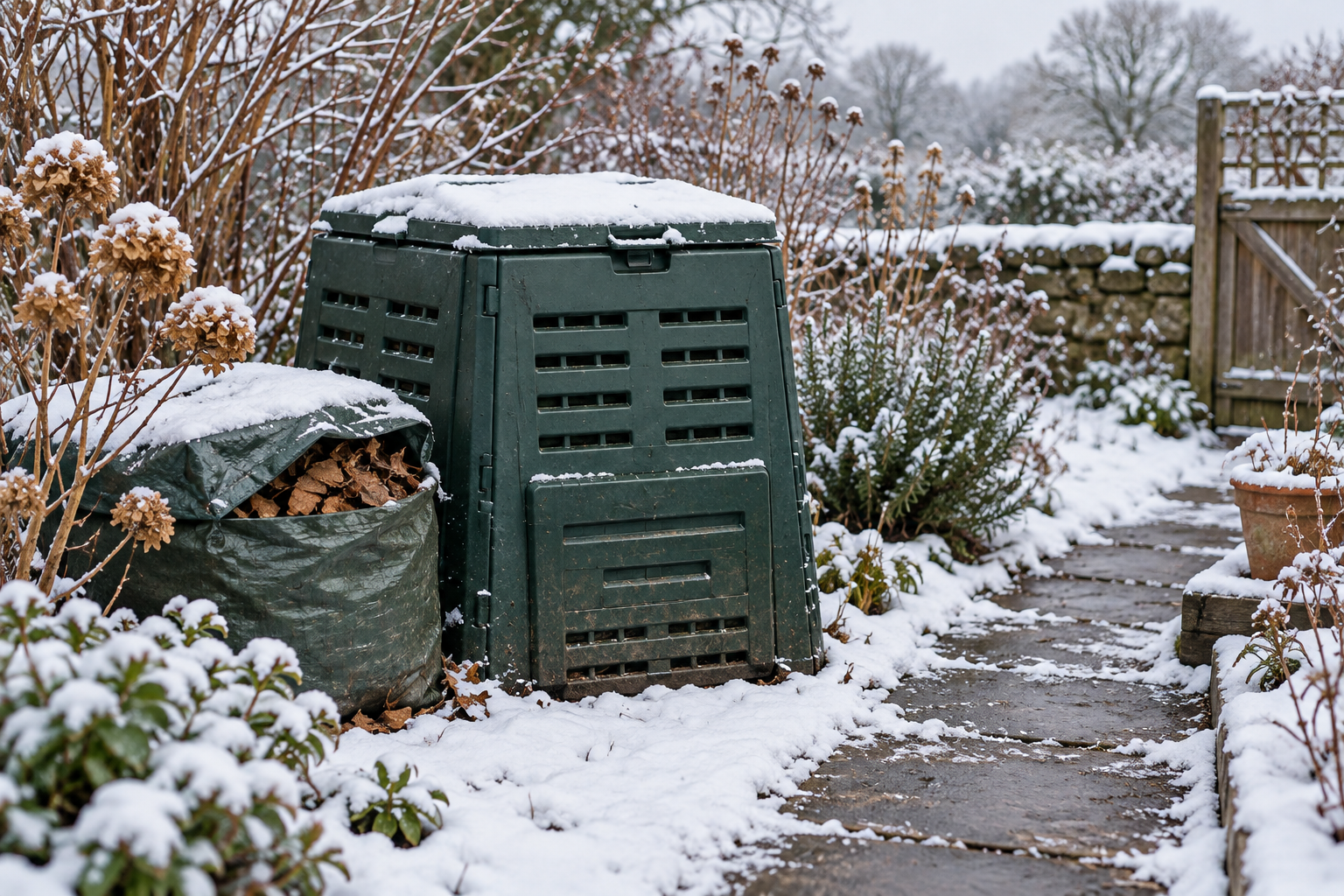
A compost bin that is easy to reach in summer may sit beyond a dark, wet, or icy path in winter. Before continuing the same routine, consider the everyday trip as well as the pile itself. A system has to remain accessible and manageable under the conditions you actually have.
Allow for slower processing
University of Illinois Extension explains that cold conditions can slow decomposition and that small piles may freeze. Its winter guidance emphasizes access and protection from excessive moisture. For a household, the immediate implication is to plan capacity realistically: adding the usual amount does not guarantee the same processing pace as in warm weather.
Watch how much room remains. Do not keep filling a difficult-to-reach bin without checking it simply because no strong smell is noticeable. Decide when the next inspection will happen and identify an appropriate backup collection route. A temporary adjustment is better than an unmanaged accumulation in unsuitable containers.
Prepare the working route
Keep suitable dry material accessible so that using it does not require digging through stored garden equipment every time. Check whether rain or melting snow reaches that reserve. Put tools where they can be reached without crossing a hazardous surface. Existing equipment may be sufficient; the useful change is often its location rather than a new purchase.
Inspect the cover after significant weather. It should do its intended job without blocking necessary airflow. If a task becomes unsafe because of ice or poor footing, do not force it. Record what remains to be done and return when conditions allow. A workable winter routine needs room for interruptions rather than assuming every scheduled visit will be possible.
Make spring easier to assess
Keep a rough distinction between material added during the cold period and material that had already broken down substantially. When regular management resumes, begin with a condition check. Avoid immediately adding a large new batch or assuming everything in the bin is ready for use simply because several months have passed.
If your outdoor setup cannot be managed reliably in winter, a confirmed municipal, private, or community food-scrap collection may provide a useful complement. Check its accepted materials and current hours. A worm bin or another indoor method is a separate system with its own ongoing needs, not an automatic winter shortcut. Choose it only when you have the space and attention required to maintain it beyond the first few weeks.