An onion left underneath grocery bags is easy to forget. Buying another bag on each shopping trip can create several small supplies in different places. Give whole onions one recognizable home so everyone can see what is available before adding more. The container does not need to be large; it needs to make the contents accessible.
These suggestions concern whole dry bulb onions with papery outer skins. Green onions and peeled or cut onions require different handling. Follow package instructions for refrigerated products. Keep cut onions covered in the refrigerator and plan to use them promptly rather than returning them to the basket of whole onions.
Choose airflow and a suitable location
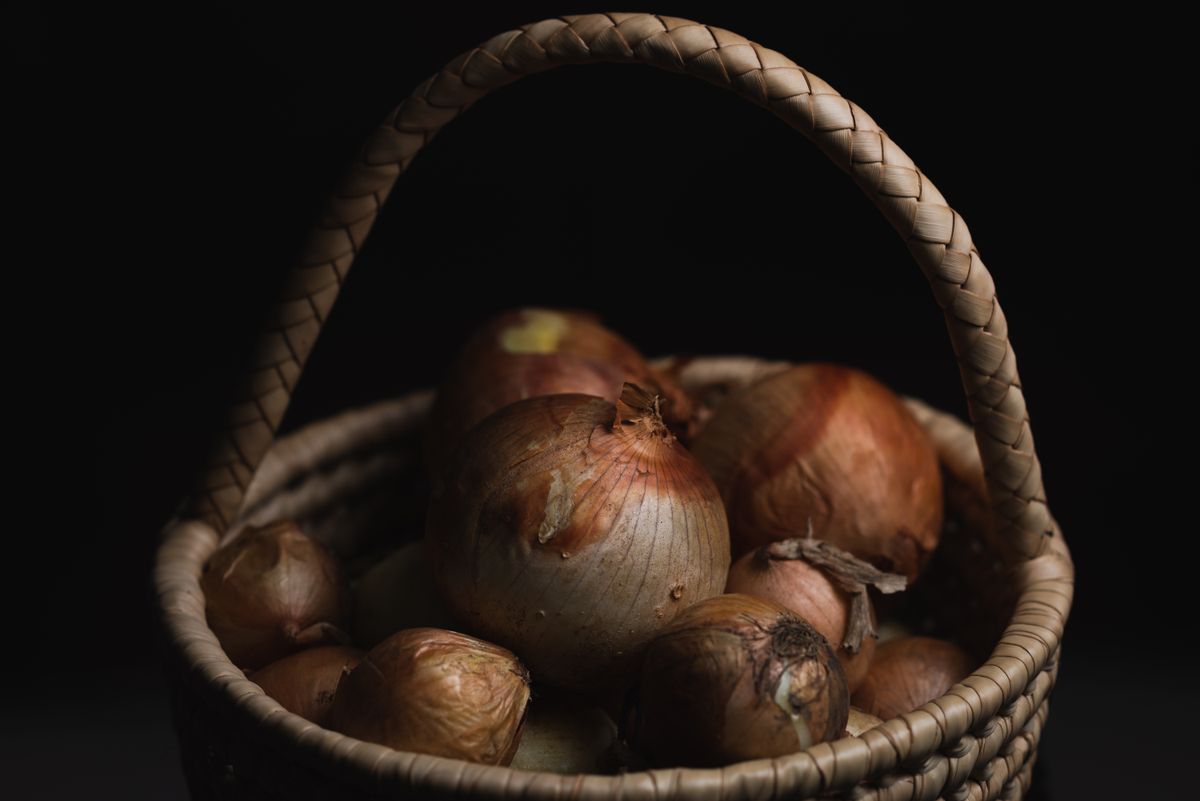
Store whole dry onions in a cool, dry, well-ventilated place. A suitable basket or mesh bag can allow air to circulate. A tightly closed plastic bag is not a good default for this job. Avoid locations beside heat-producing equipment or where splashes from the sink regularly wet the contents.
Keep potatoes in a separate storage spot. Separate containers also make it easier to judge quantities for ingredients that may be used at different rates. Matching baskets are unnecessary. Access matters more: you should be able to lift the container out and clean its shelf without unloading an entire cupboard. Check that a drawer actually provides suitable ventilation before hiding a basket inside it.
Inspect while preparing a meal
When you take out an onion, look over the remaining supply. Remove onions that are soft, wet, or moldy, and check the others instead of placing a new bag on top. Clear loose skins occasionally so they do not conceal the bottom layer. This is a small task that fits naturally into cooking, rather than a separate pantry project.
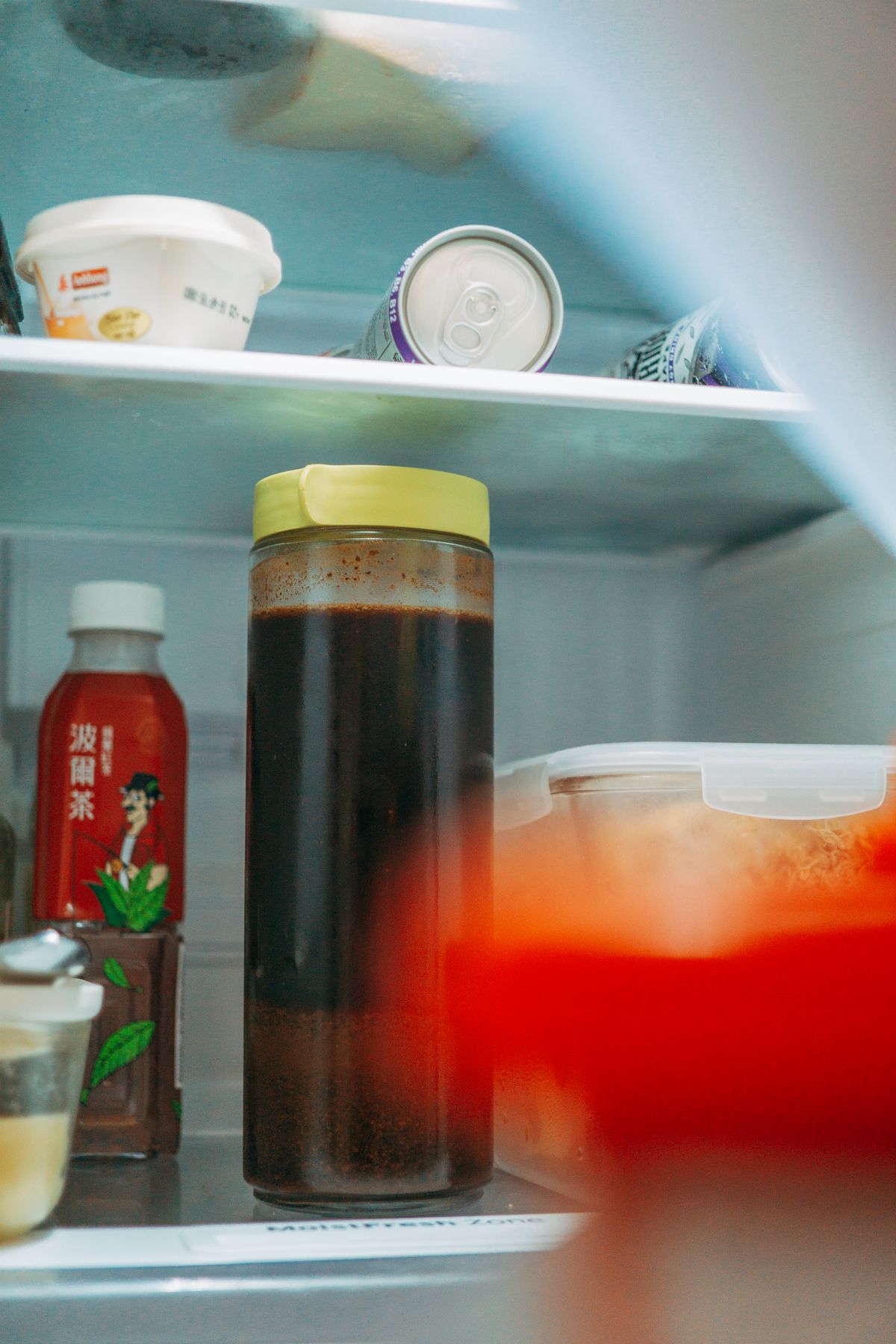
For a cut onion, write the date on its covered refrigerator container. Position it where it will be noticed during the next meal preparation and assign it to a particular dish. A visible reminder helps only if the food has also been handled and refrigerated appropriately. Do not rely on a tidy label to compensate for an unknown storage history.
Buy for the way you actually cook
Loose onions may be easier to manage than a large bag if you cook infrequently or mostly use recipes requiring one at a time. Before shopping, check both the dry storage area and any refrigerated remainder. A note saying “two whole onions available” is more useful than a vague entry for vegetables. After a few shopping trips, the quantity used between trips gives a better buying guide than the amount that happens to fit in your basket.