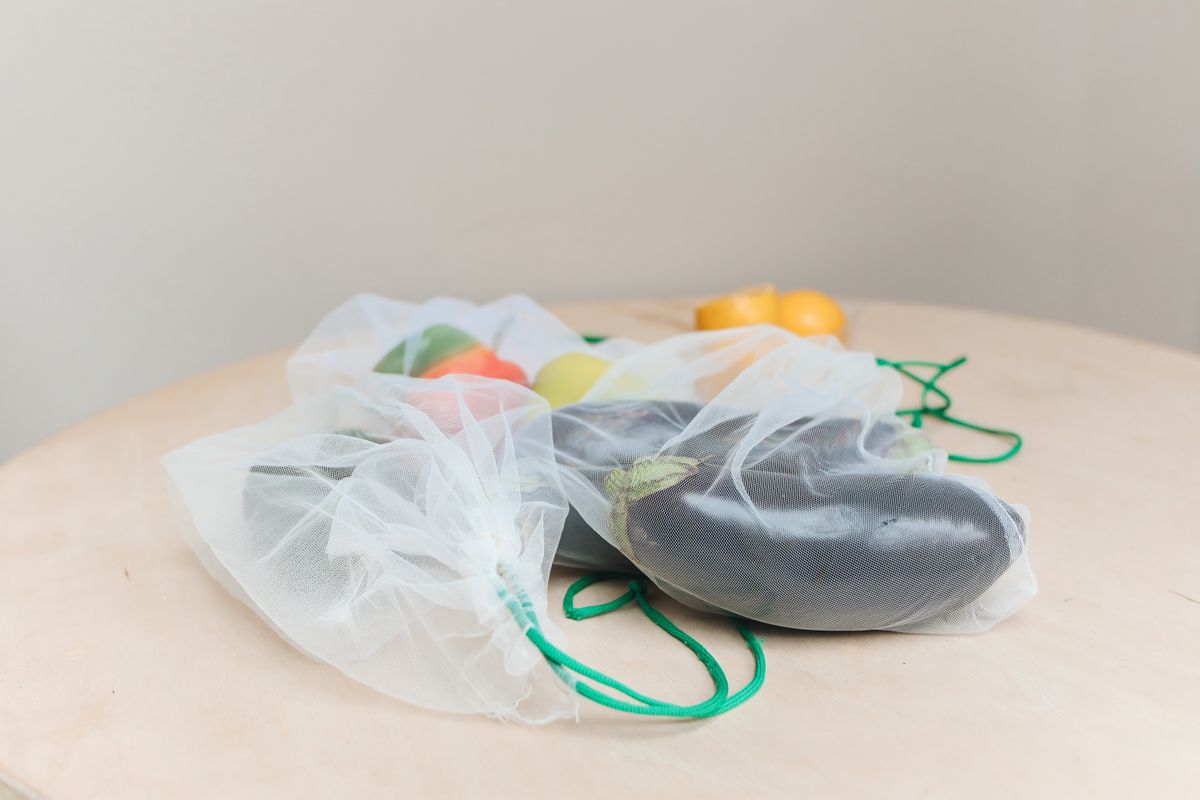
A reusable produce bag becomes useful through repeated trips, not through owning a large matching collection. Coarse mesh can hold apples together but will not contain loose grains. A tightly woven bag can carry smaller items, yet it is not automatically suitable for every food's refrigerator storage needs.
Start with the bags you have
Check seams, drawstrings, and labels. Can the opening be spread wide enough to clean the interior? Will the whole bag dry before it is folded? A simple seam repair may restore a usable bag. Persistent residue or damage to a coated food-contact surface calls for a more careful decision than simply turning the bag inside out.
At the store, ask how the weight of your own container or bag is handled. A printed tare weight may help, but the store still has its own checkout procedure. Keep items identifiable when they must be weighed separately. Putting several differently priced vegetables into one closed bag can make checkout unnecessarily awkward.
Choose protection rather than extra packaging
Some produce can travel loose when the store permits it and the item will not be damaged. There is no need to put every individual fruit in another bag. Delicate produce may travel better in a suitable rigid container than in a net squeezed beneath heavier groceries. Choose the carrying method for the actual item.
Unload bags fully when you get home and check for soil, moisture, or food residue. Move groceries to appropriate storage rather than assuming the transport bag will keep them fresh. Clean bags according to their care instructions and let them dry completely before folding. Keep used bags apart from clean ones while they wait for attention.
Make the next trip automatic
Return clean bags to the shopping tote, a basket near the exit, or another place on your normal departure route. A reliable return location matters more than owning many spares. If a bag becomes wet or dirty during a longer outing, keep it separate from clean food-contact items until you can deal with it.
Wait for several actual shopping trips before buying additional sizes. You may discover that one smaller bag is missing, while the larger bags rarely leave home. EPA's reduction and reuse guidance supports making use of existing items. For produce shopping, a modest working set with a clear cleaning and return routine is usually easier to maintain than an overflowing drawer of options.